Plastically Possible
A student art challenge: school classes turn local plastic waste into art that speaks for an animal.
Student art with a message.
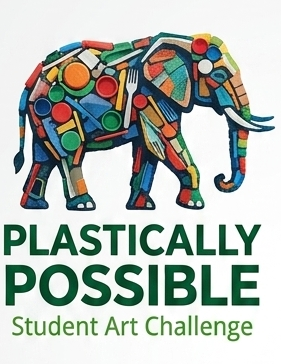
The Plastically Possible Student Art Challenge invites school classes to turn plastic waste from their own surroundings into a wall-hung artwork of an animal, bird or fish, and to explain, with science, why that species matters.
The challenge comes from Ocean Recovery Alliance and One Beach Plastic. Since 1999, the One Beach Plastic artists Richard Lang and Judith Selby Lang have turned plastic found on one beach in California into art.
In Cambodia, the challenge is organised with BambooShoot, and Angkor Wildlife & Aquarium hosts the exhibition under a memorandum of understanding (MOU).
How the challenge works.
Collect
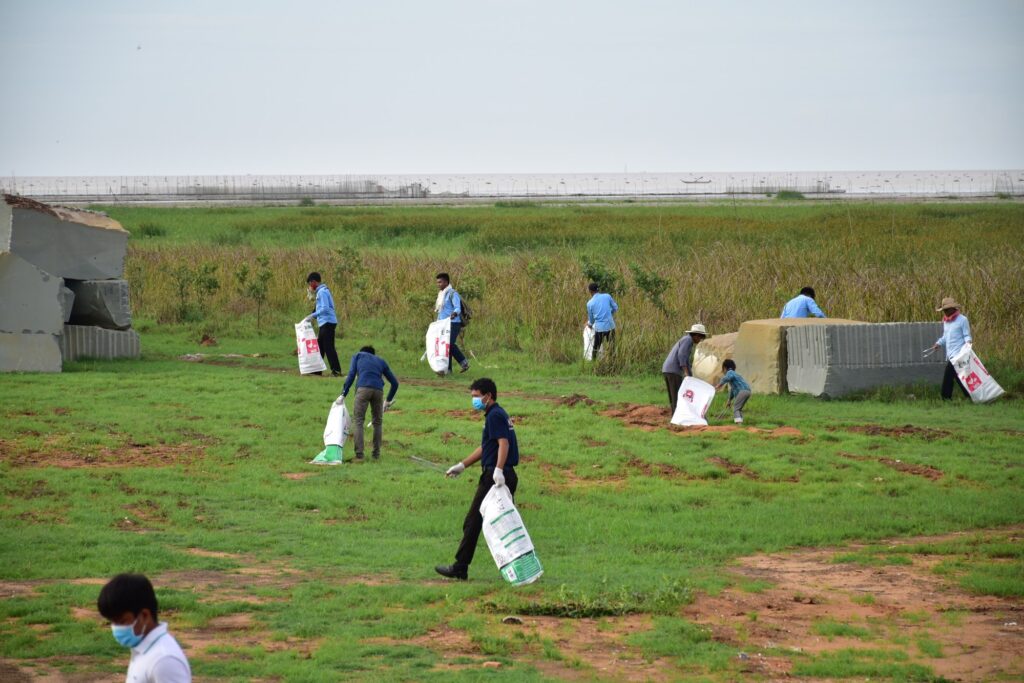
Students collect plastic waste from their local environment and wash it so it is safe to handle.
Research
The class studies its chosen species: why it matters, and how plastic pollution affects it. A short written summary of 1 to 2 pages.
Create
Plastic pieces are glued to a board in the shape of the animal. At most 1.5 m by 1 m and 20 cm thick: a wall hanging, not a sculpture.
Present
Judges select the top 5 to 10 classes. Each gives a 3-minute presentation at the awards night.
Exhibit
The finalist artworks go on show at the host venue.
Who can take part.
Primary and secondary schools, in two separate categories.
Each class enters one artwork, made together by its students, with a teacher as supervisor. A school can enter several classes. Prizes go to the class and school, not to individual students.
What the judges look for.
Creativity
Visual impact, composition, craftsmanship and good use of the plastic.
Environmental message
A clear message about plastic pollution and protecting ecosystems.
Scientific understanding
Accurate research and a clear case for why the species matters.
Teamwork
Creative sourcing of materials and the whole class taking part.
Judges include Ocean Recovery Alliance, the host venue and sponsors, and invited experts.
Dates and prizes.
Exhibition dates, awards night and prizes: To confirm